
Construction sites are prime targets for theft, vandalism, trespassing, and safety violations. With valuable materials, heavy equipment, and constantly changing layouts, these environments present unique security challenges. A single security breach can lead to costly delays, insurance claims, legal liability, and reputational damage.
If you’re wondering how to secure a construction site effectively, the answer lies in a layered, proactive approach that combines physical security, technology, trained personnel, and ongoing risk assessment.
Below is a comprehensive guide to protecting your construction project from start to finish.
The Importance Of Construction Site Security
Construction site theft costs the industry billions of dollars annually. Common targets include:
- Heavy machinery
- Copper wiring and piping
- Tools and power equipment
- Fuel
- Building materials
Beyond theft, unsecured sites also face risks from vandalism, arson, unauthorized entry, and workplace accidents.
Proper construction site security helps:
- Prevent financial loss
- Reduce project delays
- Protect workers and subcontractors
- Lower insurance claims
- Maintain compliance with safety regulations
The earlier security planning begins, the more effective it will be throughout the life of the project.
Step 1: Conduct a Construction Site Risk Assessment
Every job site is different. Start by identifying vulnerabilities.
Evaluate:
- Number and location of access points
- Lighting conditions
- Perimeter strength
- Proximity to public roads or high-crime areas
- Storage practices for materials and equipment
- Construction phase (early groundwork vs. near completion)
High-value materials and equipment should be prioritized in your security planning. A formal risk assessment ensures your protection strategy is aligned with actual threats—not assumptions.
Step 2: Strengthen Perimeter Security
The perimeter is your first line of defense.
Effective perimeter protection includes:
- Temporary fencing with anti-climb features
- Secured gates with restricted access
- Locked barriers after hours
- Clear “No Trespassing” signage
- Barriers to prevent vehicle entry
Construction sites that lack clear boundaries are significantly more vulnerable to theft and liability claims. Even visible deterrents can reduce opportunistic crime.
Step 3: Control and Monitor Site Access
Unauthorized access is one of the most common security failures.
Implement:
- Controlled entry points
- ID badges for workers
- Visitor sign-in procedures
- Access logs
- Key and credential management
Limiting entry reduces both theft and workplace safety incidents. Access control becomes even more critical as projects grow and more subcontractors rotate through the site.
Step 4: Improve Lighting and Eliminate Blind Spots
Poor lighting creates opportunity.
Install:
- High-intensity floodlights
- Motion-activated lighting
- Portable lighting towers
- Lighting around storage containers and equipment
Proper illumination not only deters intruders but also improves camera performance and nighttime monitoring accuracy. As the site layout changes, lighting should be reassessed.
Step 5: Deploy Professional Construction Site Security Guards
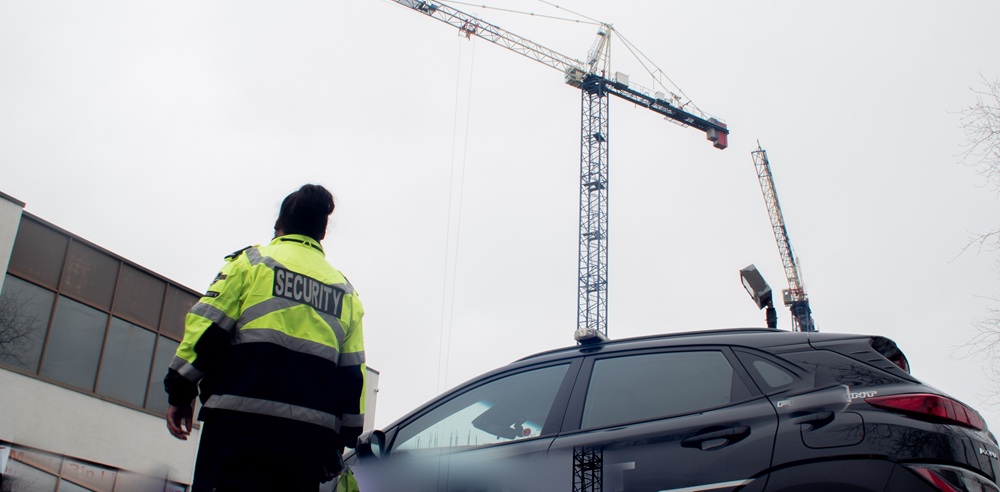
Security personnel provide both deterrence and rapid response.
Construction site security guards can:
- Monitor entry and exit points
- Conduct perimeter patrols
- Oversee deliveries
- Enforce safety compliance
- Respond immediately to suspicious activity
Depending on risk level, you may use:
- Static guards at access gates
- Mobile patrol units
- Overnight security coverage
- 24/7 on-site security
The presence of trained guards significantly reduces theft, especially after hours and on weekends when sites are most vulnerable.
Step 6: Install Surveillance and Remote Monitoring Systems
Technology enhances human oversight.
Modern construction site security systems often include:
- CCTV cameras
- Wireless surveillance systems for remote sites
- Motion detection alerts
- Remote video monitoring
- Alarm integration
Wireless and solar-powered cameras are especially useful for sites without permanent utilities. Remote monitoring allows for real-time response, even if guards are not physically present at every corner of the site.
Video documentation also provides valuable evidence for insurance and law enforcement if incidents occur.
Step 7: Secure Equipment and Materials Properly
Heavy machinery and materials require dedicated protection strategies.
Best practices include:
- Lockable steel storage containers
- Tool inventory tracking
- Immobilizing machinery after hours
- Removing keys from equipment
- Securing fuel tanks with locking systems
- GPS tracking for high-value equipment
Storing materials away from perimeter fencing reduces quick “grab-and-go” theft attempts.
Routine inventory checks should be conducted to detect discrepancies early.
Step 8: Establish Emergency and Incident Response Protocols
A security plan is incomplete without response procedures.
Ensure you have:
- Clear reporting protocols
- Emergency contact lists
- Evacuation procedures
- Coordination plans with local law enforcement
- Incident documentation processes
If fire alarm or suppression systems are impaired, fire watch services may be required to maintain compliance and reduce fire risk.
Preparedness reduces panic, limits damage, and improves recovery time.
Step 9: Adapt Security as the Project Evolves
Construction sites are dynamic environments. What works during foundation work may not be sufficient during finishing stages.
Adjust security based on:
- Project phase
- Equipment on site
- Workforce size
- Seasonal conditions
- Nearby development
Routine security audits help identify new vulnerabilities before they lead to loss.
The Benefits of Professional Construction Site Security Services
Partnering with a professional security provider offers:
- Reduced theft and vandalism
- Fewer work stoppages
- Improved worker safety
- Better compliance with insurance requirements
- Lower long-term liability risk
Construction site security is not just about preventing crime, but also protecting your investment and ensuring operational continuity.
A Layered Approach Works Best
There is no single solution for securing a construction site. The most effective strategy combines:
- Risk assessment
- Perimeter protection
- Access control
- Lighting
- Surveillance technology
- Security guards
- Ongoing evaluation
By implementing multiple layers of protection, you significantly reduce the likelihood of costly incidents.
If you manage or oversee construction projects, proactive security planning should begin before ground is broken, not after a loss occurs.
Construction Site Security FAQs
What is the best way to secure a construction site at night?
A combination of perimeter fencing, motion-activated lighting, surveillance cameras, and overnight security guards provides the strongest protection.
How can remote construction sites be secured?
Remote sites benefit from wireless cameras, mobile patrols, GPS equipment tracking, and solar-powered monitoring systems.
Do security guards reduce construction theft?
Yes. A visible security presence is one of the most effective deterrents against theft and vandalism.
Is construction site security worth the cost?
The cost of security is often far lower than the financial impact of stolen equipment, delayed timelines, insurance deductibles, and reputational damage.